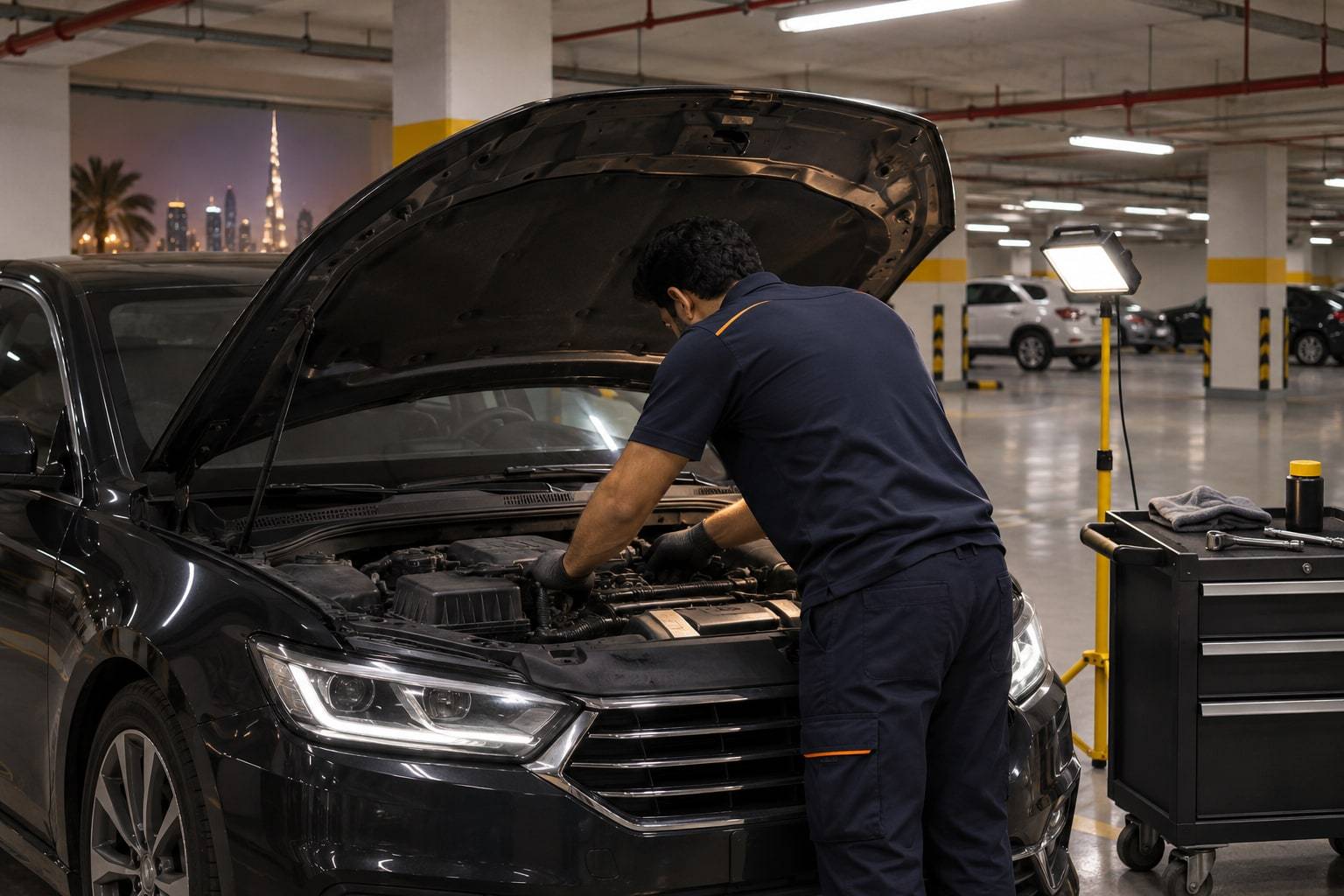
Mobile battery replacement for the Honda Accord, matched to your generation and engine. We come to your home, office or car park.
The Honda Accord battery size depends on the year and engine. Most use a standard (flooded) or an EFB or a 12V auxiliary (hybrid versions) battery. We confirm the exact size from your car or the label on the fitted battery.
Battery fitment depends on generation, engine, equipment and market. We list what is typical and confirm the exact specification from your car or the fitted battery’s label before replacing anything.
Honda Accord battery specification summary
Battery technology
Flooded — Versions without idle-stop
EFB — Versions with idle-stop
Hybrid auxiliary (12V) — Hybrid versions
Voltage
12 V starter battery
Capacity (Ah)
Confirmed on inspection
Cold cranking amps (CCA)
Confirmed on inspection
Case size / terminals
Confirmed on inspection
Battery location
Under the bonnet
Registration / coding
Depends on versionSome versions benefit from resetting the battery sensor after replacement.
Start-stop
On some variants
Generations covered
10th generation2017–2022
11th generation2022–present
How we confirm your battery
Read the label on the battery currently fitted
Check year, engine and equipment (start-stop, hybrid)
Match size, terminals, capacity and technology
Send us a photo of your battery label on WhatsApp to speed this up.
Common problems
Battery problems we see on the Honda Accord
Battery sensor on the negative terminal
Newer Accords use a battery sensor. Fitting the wrong battery type can upset charging and idle-stop behaviour.
How it works
Replacing a Honda Accord battery, step by step
01
Confirm the specification
We check your Accord’s generation, engine and fitted battery label.
02
Access the battery
Under the bonnet. Trim or covers are removed carefully where needed.
03
Swap with memory support
Power supported where possible so settings and adaptations are kept.
04
Test charging
Alternator output and starting checked before we leave.
AGM, EFB or conventional
Battery options for the Accord
Fit the type your car came with. You can sometimes upgrade (for example from EFB to AGM), but never fit a lower type.
Common on these cars
Conventional (flooded)
Standard lead-acid battery with liquid electrolyte.
The most common and affordable type. Heat speeds up water loss and plate corrosion, so in Dubai they tend to wear out faster than in cooler climates.
Best for: Cars without start-stop that were built for a conventional battery.
Common on these cars
EFB (Enhanced Flooded Battery)
Stronger flooded battery built for more frequent cycling.
Handles repeated starts better than a conventional battery. A car that came with EFB should get EFB or AGM, never a conventional battery.
Best for: Entry-level start-stop systems and cars originally fitted with EFB.
AGM (Absorbent Glass Mat)
Sealed battery with electrolyte held in glass mats.
Spill-proof, vibration-resistant and built for deep cycling. Common in European premium cars and often fitted in the boot or under a seat. A car built for AGM must stay on AGM.
Best for: Advanced start-stop, energy recovery and cars with heavy electrical demand.
Flooded (versions without idle-stop); EFB (versions with idle-stop); Hybrid auxiliary (12V) (hybrid versions). Capacity and size depend on the exact version, so we confirm from your car before fitting.
Where is the battery on a Honda Accord?
Under the bonnet.
Does the Honda Accord need battery registration?
Depends on version. Some versions benefit from resetting the battery sensor after replacement.
How long does a Accord battery last in Dubai?
Heat shortens battery life in the UAE, and usage matters too: short trips, long idling with the AC on and accessories all add wear. Many drivers replace every two to three years. A test tells you where yours stands.